

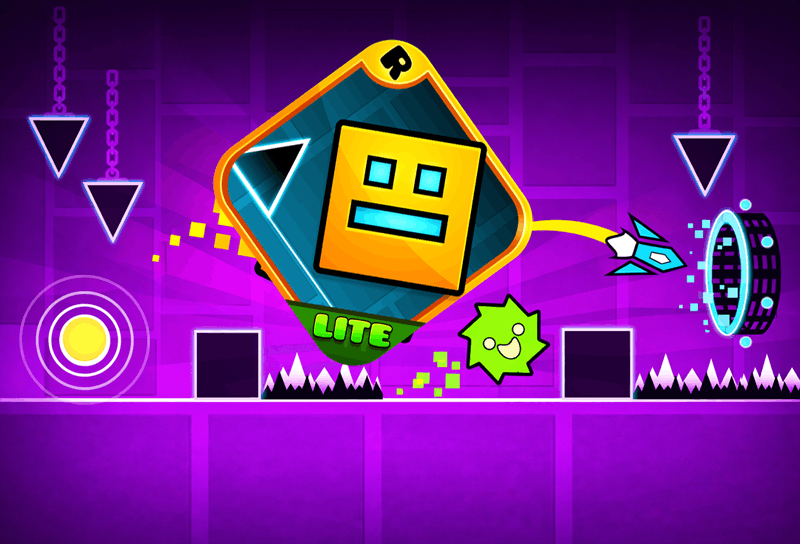
Geometry Dash: A Compact Guide to Rhythm, Skill, and Community
- October 12, 2026
- 0 Likes
- 4 Views
- 0 Comments
Geometry Dash is a rhythm-based platformer developed by Robert Topala (RobTop) and first released in 2013. Simple in concept but fiendishly demanding in execution, the game pairs precise timing with fast reflexes, asking players to guide a geometric icon through obstacle-laden levels synchronized to energetic electronic music. Over the years it has grown into a cultural phenomenon within the indie gaming scene, notable for its addictive gameplay loop, vibrant community, and user-generated content.
Gameplay and Design
Core mechanics: Players control a cube (and later different forms) that automatically moves forward; the only input is jumping (and short taps for mid-air actions), making timing and pattern recognition the heart of play. Colliding with an obstacle means restarting the level from the last checkpoint or the beginning.
Level types and progression: Official levels vary in theme, tempo, and mechanics — gravity flips, ship flying segments, portals, and tight sequences of obstacles. Difficulty is ranked from Easy to Demon, giving a clear sense of progression.
Audio integration: Music isn’t background filler; levels are built around tracks (often provided by independent electronic artists), so visual cues and obstacle placement sync with beats and rhythms, enhancing immersion and memorability.
User-Generated Content and Community
Level editor: A robust in-game editor allows players to design, share, and rate custom levels. This has multiplied the game’s longevity — player creations range from simple practice stages to elaborate, music-synced masterpieces.
Social aspects: Forums, YouTube content creators, and Discord servers foster community challenges, level showcases, and collaboration. Speed-runs, “no-death” runs, and Demon completion videos have become staples of the community.
Creativity vs. moderation: While the level editor encourages creativity, it also raises issues like copyright (music licensing) and toxicity in competitive spaces. The developer and platform moderators handle submissions and community disputes imperfectly, as in any large modding ecosystem.
Why It Appeals
Accessibility: Controls are minimal, making it approachable to casual players while still offering a high skill ceiling.
Immediate feedback loop: Short levels and quick restarts reduce frustration from failure, encouraging repeated attempts and practice.
Achievement and flow: The game’s design encourages a flow state—mastering a segment yields tangible satisfaction, and synchronized audio-visual cues amplify that reward.
Critiques and Limitations
Difficulty spikes: The steep learning curve, especially in Demon levels, can alienate newcomers seeking slower pacing or narrative depth.
Repetitiveness: Core mechanics don’t evolve dramatically over time; some players find later levels rely on memorization rather than emergent skill.
Accessibility concerns: Fast visuals and abrupt obstacles can be challenging for players with motor or visual processing difficulties; options for customization and difficulty scaling are limited compared to some modern titles.
Cultural Impact and Legacy Geometry Dash has inspired a subculture of creators, musicians, and speedrunners. Its model—simple mechanics, music integration, and a powerful level editor—demonstrates how replayability and community tools can extend an indie game’s life far beyond initial release. It also highlights tensions common to user-generated ecosystems: creative freedom versus quality control, and competitive prestige versus casual enjoyment.
Conclusion
Geometry Dash is more than a reflex test; it’s a study in how rhythm, minimal controls, and community creativity combine to produce enduring entertainment. While its uncompromising difficulty and occasional accessibility issues limit its appeal to some, those drawn to its fast-paced, synchronised thrills will find a deep, active scene with near-endless levels to explore.
